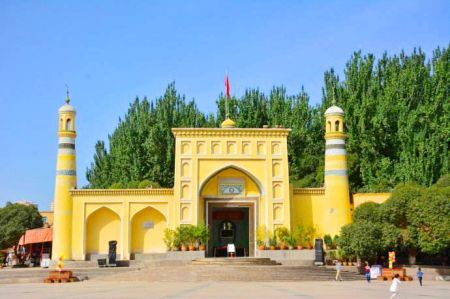
The Heartbeat of an Ancient City
No visit to Kashgar is complete without experiencing the Id Kah Mosque. Standing proudly in the central square of the old city, this is not only the largest mosque in China but also the vibrant spiritual and social heart of Kashgar’s Uyghur community. Its name means “Place of Festival and Celebration,” and it comes alive, especially during Friday prayers and major Islamic holidays like Eid, when tens of thousands of worshippers fill its vast courtyard.
Founded in 1442 (though expanded and rebuilt over centuries), the mosque’s architecture is a majestic blend of Central Asian and Islamic styles. You are first greeted by a grand, saffron-yellow facade and a towering entrance gate adorned with intricate mosaics and calligraphy. Inside, the expansive courtyard, shaded by rows of ancient poplar trees, can hold over 20,000 people. The main prayer hall, with its wooden columns and brightly colored ceilings, is both elegant and solemn.
More than a monument, the Id Kah is a living institution. Outside prayer times, the square and gardens are a lively social hub where locals chat, children play, and visitors absorb the profound sense of place. The call to prayer echoing from its minarets is the defining soundscape of Kashgar. For international visitors, the mosque offers a powerful, respectful window into the living Islamic culture of Xinjiang, embodying both the deep history and the contemporary vitality of this legendary Silk Road crossroads.