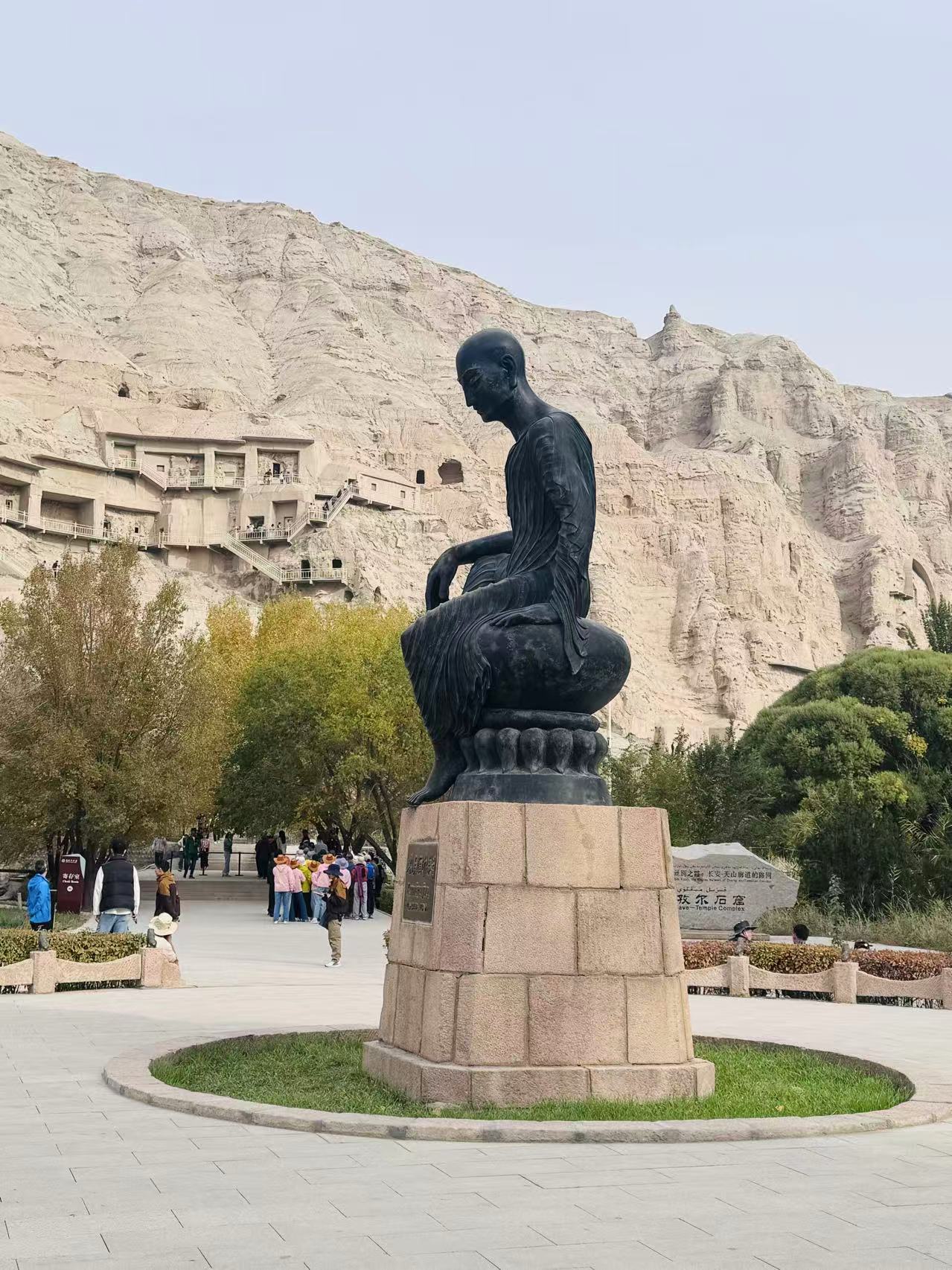
The Cradle of Chinese Buddhist Art
Carved into the cliff face of the Mingati Hills near Kuqa, the Kizil Thousand-Buddha Caves claim the title of the earliest major Buddhist cave complex in China. Dating from the 3rd to 9th centuries AD, these over 230 caves predate the more famous Mogao Caves and represent a critical fusion of Indian, Persian, and Central Asian artistic styles that would later influence Buddhist art across China.
A visit to Kizil is a pilgrimage into the origins of an artistic tradition. While time and history have damaged many caves, the surviving murals are breathtaking. They depict Jataka tales (stories of the Buddha’s past lives), celestial musicians, serene Buddhas, and vivid scenes of daily life on the Silk Road. The distinct “Kizil style” is notable for its elegant lines, a unique sapphire-blue pigment, and realistic, expressive figures. Cave 38, for example, is famed for its magnificent mural of celestial musicians playing lutes and flutes.
The site is divided into several grotto groups along the river. The quiet, scholarly atmosphere encourages contemplation. Seeing these ancient images in their original setting—not a museum—carries immense power. They were created as acts of devotion and tools for teaching, a visual scripture for traveling monks. Kizil is not merely an art gallery; it is the foundational scripture of Buddhist cave art in China, offering an unparalleled glimpse into the spiritual and artistic currents that flowed along the Silk Road.