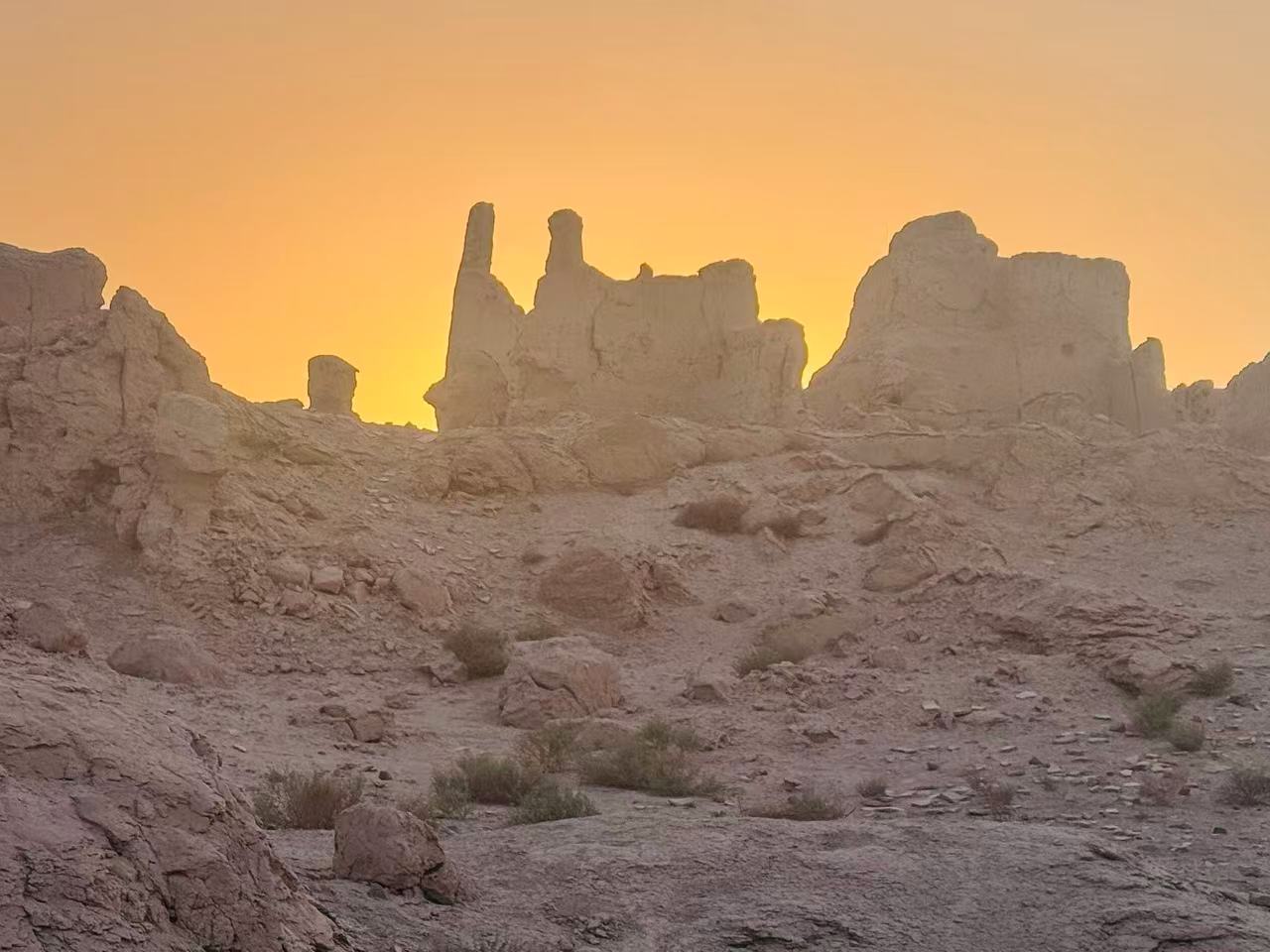
Jiaohe Ancient City: The Desert’s Time Capsule
Carved not from stone, but from a mighty loess plateau between two riverbeds, the Jiaohe Ancient City is one of the world’s most unique and well-preserved ruins. Located just west of Turpan, this sprawling site resembles a giant, sun-bleached ship marooned in the desert. Its name, meaning “River Junction,” hints at its strategic origins over 2,300 years ago. What makes Jiaohe astounding is its construction method: the entire city—temples, homes, streets, and government offices—was painstakingly carved downward from the flat-topped plateau. Walls were the remaining earth, creating a natural, impregnable fortress.
Walking through its silent avenues today is an unparalleled journey into the Tang Dynasty (7th-10th centuries AD), when Jiaohe served as a crucial military and administrative hub on the Silk Road. You can clearly distinguish the city’s meticulous layout: a central north-south avenue separating residential districts, with a grand Buddhist monastery complex at the northern end and a majestic temple in the south. The erosion of centuries has softened the edges of buildings, giving the city an organic, almost sculptural quality, especially under the golden light of dawn or dusk.
Unlike many reconstructed sites, Jiaohe offers raw, untouched history. You can peer into the remains of homes, imagine the bustle in the marketplace, and stand in the cavernous main temple where monks once chanted. The silence is profound, broken only by the wind whispering through the ruins—a powerful reminder of the rise and fall of empires along the great trade routes. It is not just a ruin; it’s a monumental piece of earth art and a hauntingly beautiful testament to human endeavor.