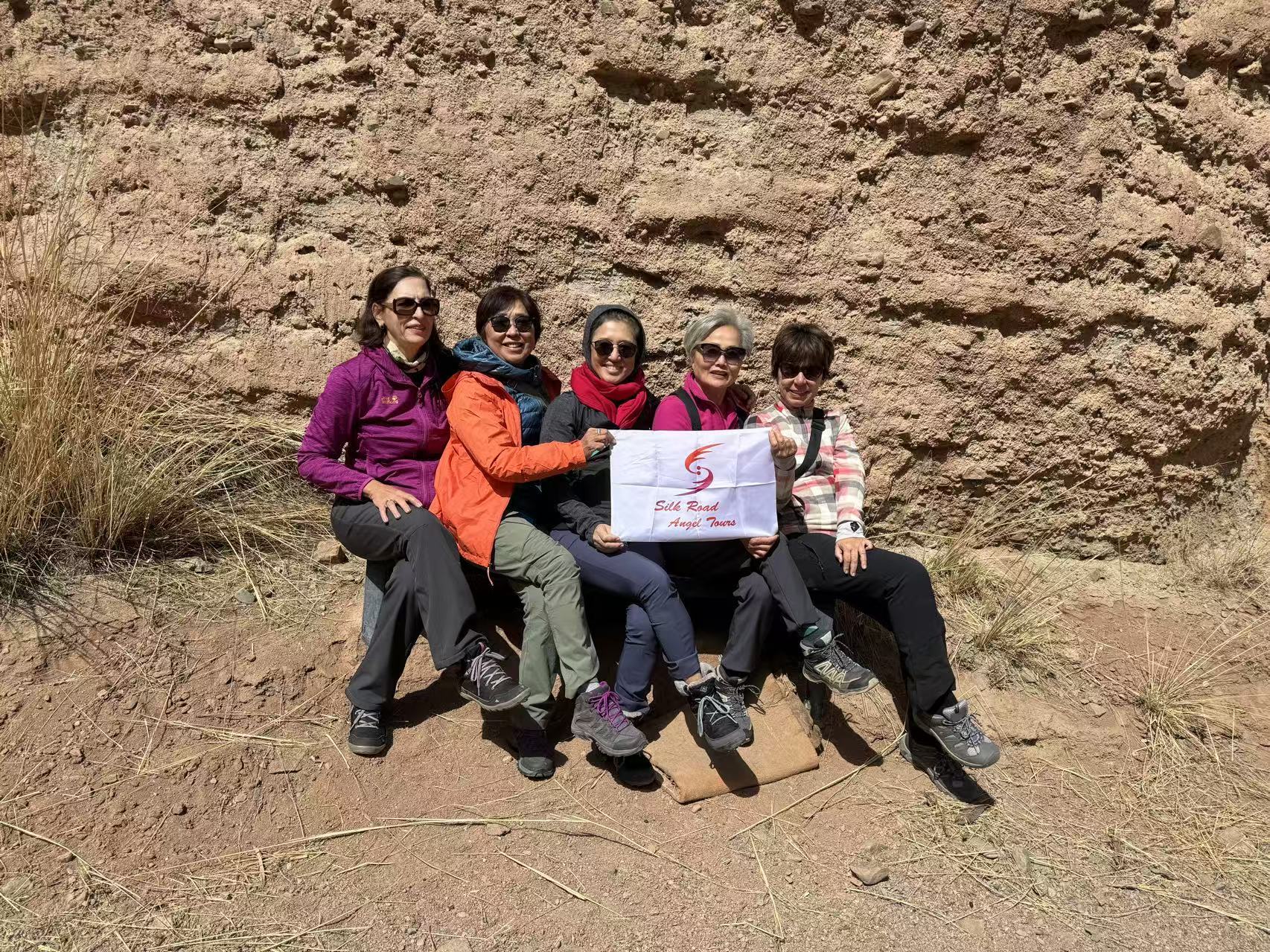
Geological Formation & Natural Architecture
Often called “China’s Grand Canyon,” Pinghu Lake (平山湖) presents a 150-square-kilometer symphony of erosion carved over 80 million years. Located 60 kilometers northeast of Zhangye, this crimson-hued landscape reveals geological chapters from the Cretaceous to Quaternary periods. The canyon’s defining features—towering pillar formations, deep narrow gorges, and natural arches—result from the relentless work of wind and water upon layered sandstone and conglomerate. Unlike the more famous Zhangye Danxia, Pinghu offers immersive exploration: visitors descend 200+ meters into the canyon floor, surrounded by stratified walls displaying iron oxide banding in shades from rust-red to ochre-yellow, each hue indicating different mineral compositions and climatic conditions during deposition.
Biodiversity & Desert Ecology
Contrary to initial appearances, Pinghu sustains remarkable biodiversity within its microclimates. The canyon’s varying elevations (1,800–2,500 meters) and orientations create diverse habitats supporting 280+ plant species, including drought-adapted species like Caragana korshinskii (sand willow) and Reaumuria soongorica (salt-loving shrub). Spring (April-May) transforms the canyon with ephemeral wildflowers, while autumn brings golden tamarisk foliage. Animal residents include the Gobi argali (occasionally spotted on higher plateaus), Himalayan griffon vultures circling thermal currents, and numerous reptile species adapted to the arid environment. Recent camera-trap studies have documented increasing wildlife activity following improved conservation measures, including seasonal water sources that support small mammal populations.
Exploration Routes & Adventure Tourism
Pinghu offers China’s most accessible yet dramatic canyon hiking. The Classic Circuit (8km, 3–4 hours) winds through “One-Line Sky”—a passage so narrow visitors sidestep through 300-meter-long fissures with cliffs rising 30 meters overhead—emerging at “Lover’s Peak,” twin pillars joined at the base. More adventurous travelers opt for the Deep Canyon Route involving ladders descending sheer cliff faces to the canyon floor, where winding paths follow ancient dry riverbeds. Since 2019, guided geological tours explain formations like “Turtle Rock” (differential weathering creating shell-like patterns) and “Nine-Turns Corridor” (meander scars from Pleistocene rivers). For those preferring less exertion, the canyon rim drive offers panoramic vistas, particularly stunning at sunset when shadows dramatically accentuate the layered topography.
Cultural Heritage & Human Adaptation
Beyond natural wonders, Pinghu preserves traces of human adaptation. Nearby, Ming Dynasty beacon towers remind how this dramatic terrain served as natural defense along the Hexi Corridor. Local Mongolian herders have traditionally used upper plateaus for seasonal grazing, their knowledge of micro-climates passed down generations. Archaeologists have identified Neolithic stone tool workshops along the canyon rims, suggesting ancient hunting groups exploited the terrain’s natural ambush points. This long human interaction illustrates how formidable landscapes were navigated and utilized, creating cultural landscapes where natural architecture influenced settlement patterns and economic activities across millennia.
Conservation & Sustainable Development
Designated a national geological park in 2014, Pinghu balances protection with accessibility. Infrastructure includes strategically placed viewing platforms minimizing soil compaction, while elevated walkways protect fragile desert crusts. A water circulation system collects and reuses limited precipitation for native vegetation restoration. The park collaborates with local herding families, training them as nature guides—an economic alternative that reduces grazing pressure while valuing traditional ecological knowledge. Monitoring stations track air quality, erosion rates, and visitor impacts, with real-time data informing management decisions like temporary trail closures during sensitive breeding seasons.
Visitor Experience & Practical Considerations
The best visiting seasons are May-June and September-October, avoiding summer heat extremes and winter cold. Morning light illuminates canyon depths, while late afternoon accentuates texture and color. Essential preparations include sturdy footwear, sun protection, and ample water—facilities within the canyon remain limited intentionally. Nearby, the Pinghu Lake Eco-Lodge offers traditional courtyard accommodations featuring solar-powered designs that blend with the landscape. For photographers, the “Million-Army Gorge” presents particularly dramatic compositions, where erosion has created pillar formations resembling ranks of soldiers—a natural spectacle that has inspired both geological wonder and human imagination across centuries.