Zhangye Matisi Grottoes: Where Buddhist Art Meets Natural Majesty
Historical Context & Geographical Setting
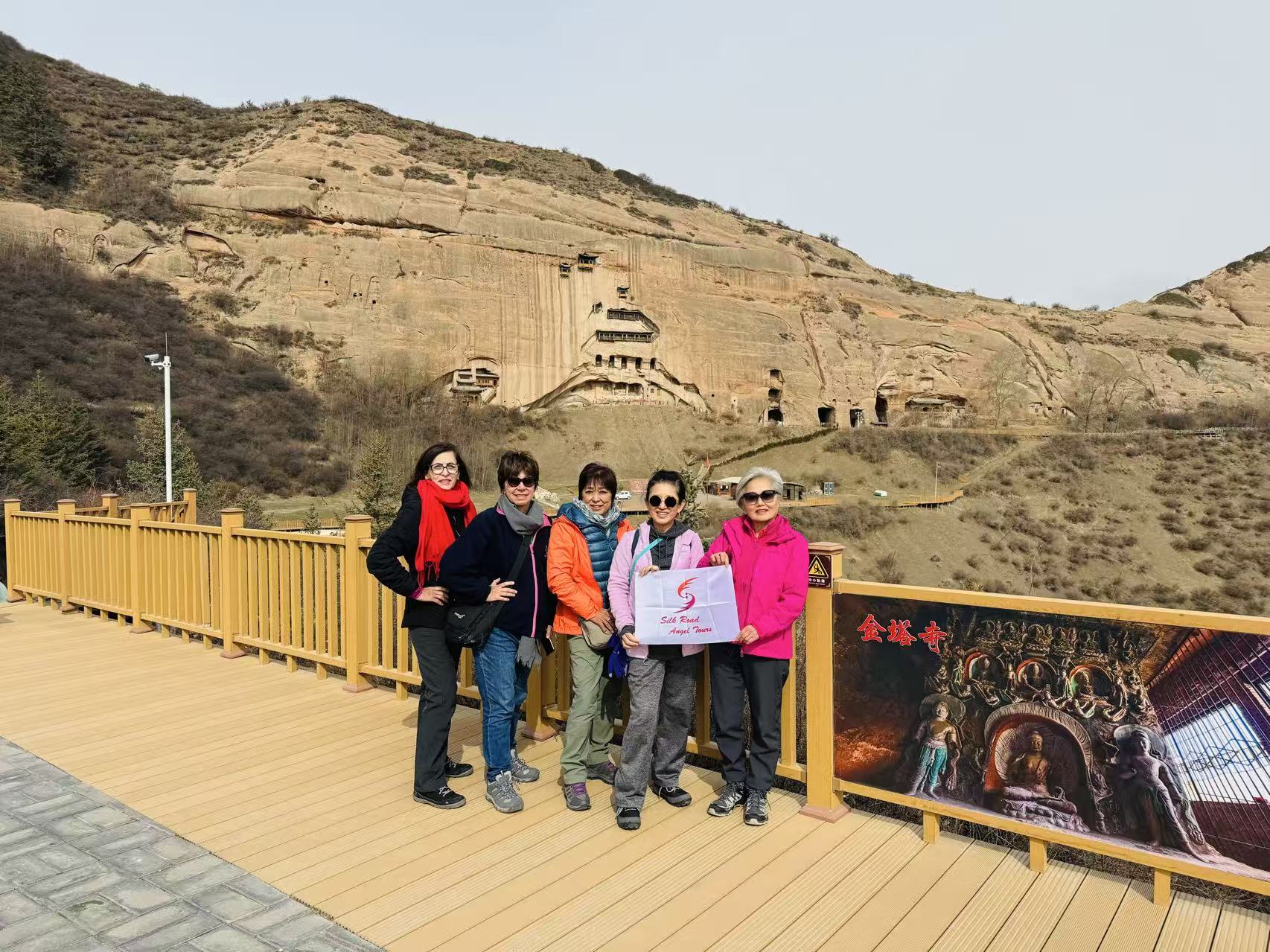
Nestled 65 kilometers south of Zhangye city in Gansu Province, the Matisi Grottoes (马蹄寺石窟) represent a remarkable synthesis of human devotion and natural grandeur. Carved into the dramatic cliffs of the Qilian Mountains foothills, this extensive cave temple complex dates back over 1,600 years to the Northern Liang period (397–439 CE), with continuous expansion through the Tang, Ming, and Qing dynasties. Unlike the desert-situated Mogao Grottoes, Matisi emerges from lush alpine meadows at approximately 2,700 meters elevation, where Tibetan prayer flags flutter alongside thousand-year-old Buddhist art, creating a unique spiritual landscape that bridges Han Chinese and Tibetan Buddhist traditions.
Architectural Marvels & Artistic Significance
The complex comprises over 70 caves distributed across seven primary sites, with the most astonishing being the “Thirty-Three Heavens” cave—a seven-story vertical labyrinth housing 21 interconnected chambers representing the Buddhist cosmological concept of the desire realm. Visitors ascend through narrow, steep passages carved directly through rock, experiencing what pilgrims have felt for centuries: the physical journey as spiritual metaphor. The “Treasure Monastery Cave” contains the largest single chamber, measuring 27 meters deep with a central pillar featuring intricately carved Buddhas. Remarkably, many caves incorporate functional monastery spaces, including meditation cells, assembly halls, and living quarters, demonstrating how Buddhist practice and artistic expression were seamlessly integrated into daily monastic life.
Artistic Styles & Iconographic Evolution
Matisi’s sculptures and frescoes reveal fascinating stylistic transitions. Early Northern Liang works show distinct Gandharan influences from Central Asia, with Buddha figures displaying Greco-Roman inspired drapery and facial features. By the Tang Dynasty (618–907 CE), the art evolves into the quintessential Chinese Buddhist style: serene, rounded faces with graceful lines and flowing garments. Particularly noteworthy are the Tang dynasty polychrome clay sculptures in Cave 8, where Avalokitesvara (Guanyin) figures demonstrate exceptional craftsmanship in their expressive hands and detailed ornamentation. Unlike many Chinese grottoes damaged during political turmoil, Matisi’s relative isolation preserved numerous original Ming and Qing restorations, offering a rare continuous visual record of Buddhist art’s evolution in Northwest China.
Cultural Intersections & Living Heritage
What distinguishes Matisi is its ongoing role as both historical site and active religious center. For approximately four months annually—coinciding with traditional pilgrimage seasons—Tibetan Buddhist monks resume rituals in caves that double as museums, their chanting echoing through chambers where tourist footsteps fall. This living heritage manifests most vividly during the Mati Temple Festival, when local Yugur and Tibetan communities gather for religious ceremonies that have continued, with interruptions, for centuries. The grottoes physically embody the Silk Road’s cultural synthesis: early Indian Buddhist iconography merges with Central Asian decorative motifs, Chinese architectural principles, and later Tibetan Vajrayana influences. Recent scholarship particularly highlights how the site’s layout mirrors sacred geography concepts from multiple Buddhist traditions.
Conservation Challenges & Sustainable Tourism
Preserving Matisi presents unique difficulties. Unlike arid desert caves, these mountain grottoes face water infiltration, freeze-thaw weathering, and vegetation damage. Conservation teams employ innovative techniques including microbial consolidation to strengthen fragile pigments and non-invasive monitoring systems to track environmental changes. Tourism management balances accessibility with preservation—wooden walkways protect delicate floors while allowing visitors to experience the caves’ atmospheric spirituality. As of 2023, approximately 40% of the grottoes remain restricted to research teams, ensuring ongoing archaeological study can continue alongside carefully managed public access.
Visitor Experience & Practical Information
A visit to Matisi engages all senses: the scent of juniper incense, the sound of wind through mountain passes, the tactile experience of ancient stone staircases worn smooth by generations of pilgrims. Spring (May-June) offers wildflower-covered meadows, while autumn (September-October) provides clear mountain air with golden foliage. The site requires moderate physical mobility due to steep climbs. Nearby, the Mati Tibetan township offers homestays, allowing visitors to experience local hospitality while supporting community-based tourism—an increasingly important model for preserving both cultural heritage and local livelihoods in China’s western regions.